 The Modern Chiropractor
The model — Spinal Load Management
Pain is the last link in a chain. We work the whole chain.
This page is the entire model, published — the two factors behind every back pain episode, the four tissues where pain lives, and the thirteen biomechanical indicators we use to find the loading before it hurts. Nothing gated, nothing held back. The list is public; the skill is trained.
The two factors
Every episode of back pain is loading plus sensitivity.
Not bad luck, not bad genes, not "just getting older." When spinal tissue is loaded beyond its capacity for long enough — or hard enough — it sensitizes. Once sensitized, it hurts under loads it used to handle easily. That's the cycle, and both halves matter.
Excessive loading.
External load comes from outside: gravity, lifting, carrying, injuries. Internal load comes from within — tight muscles and fascia compressing the spine around the clock, like someone squeezing your vertebrae together twenty-four hours a day. If your spine can handle 100 pounds but internal tension is already applying 40, you're living on 60 pounds of margin.
Tissue sensitivity.
Loading alone doesn't cause ongoing pain — sensitivity does. It arrives suddenly (the lift that went wrong) or gradually (the truck seat, the desk chair, the years). "You bend over to pick up a pencil and your back seizes. It wasn't the pencil." And once tissue is sensitized, rest alone won't fix it: sensitized tissue must be unloaded to heal.
The four tissues
Where pain lives — and what each tissue needs.
Four tissues cause roughly ninety percent of back pain. Each has its own pain pattern, and each needs its own kind of unloading — which is why treatment that ignores the tissue is essentially a guess.
The disc.
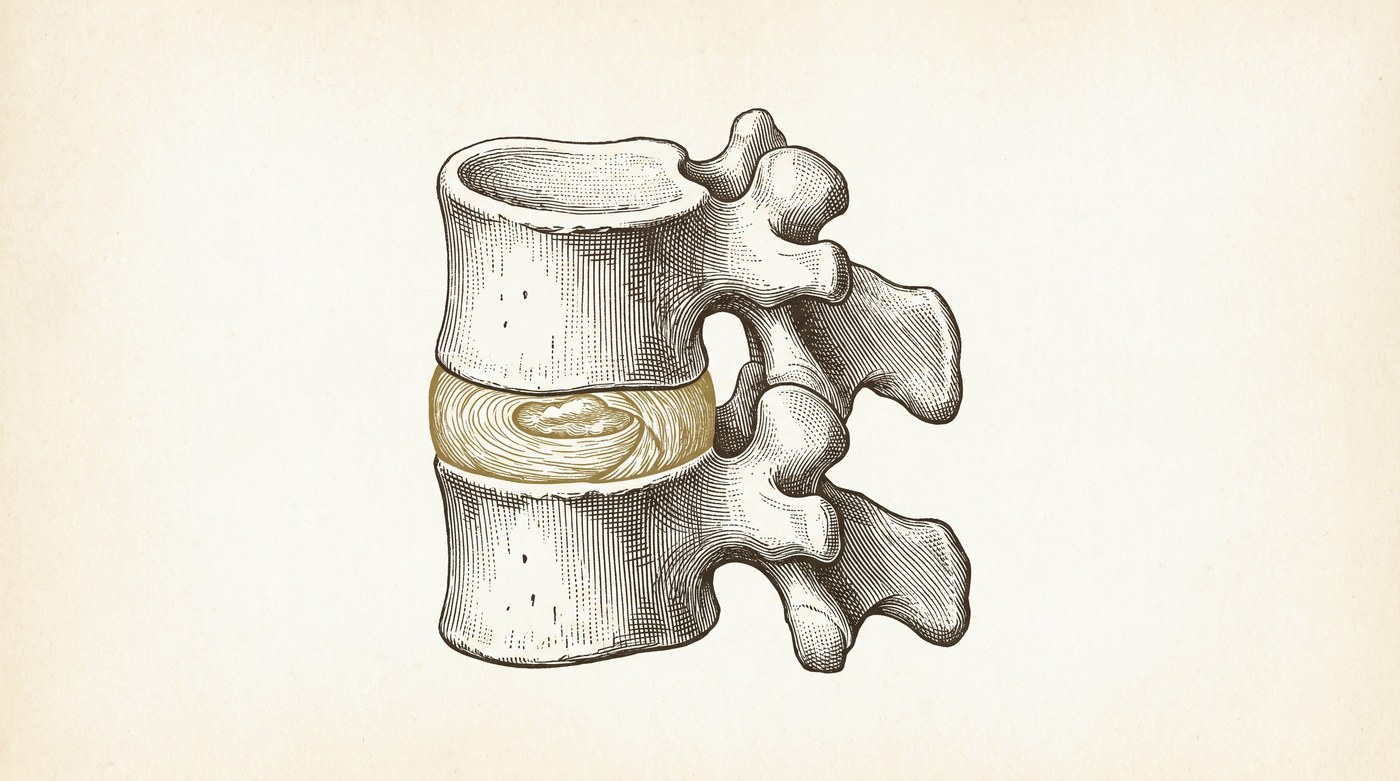
Central low-back pain, worse with sitting and bending. A gel center inside fibrous rings — overload tears the rings and the disc becomes inflamed and hypersensitive, sometimes bulging into a herniation. A sensitive disc needs progressive unloading: sustained negative pressure restores the flow of fluid and nutrients that a chronically loaded disc loses. A guarded, hesitant forward bend is its signature.
The facet joints.
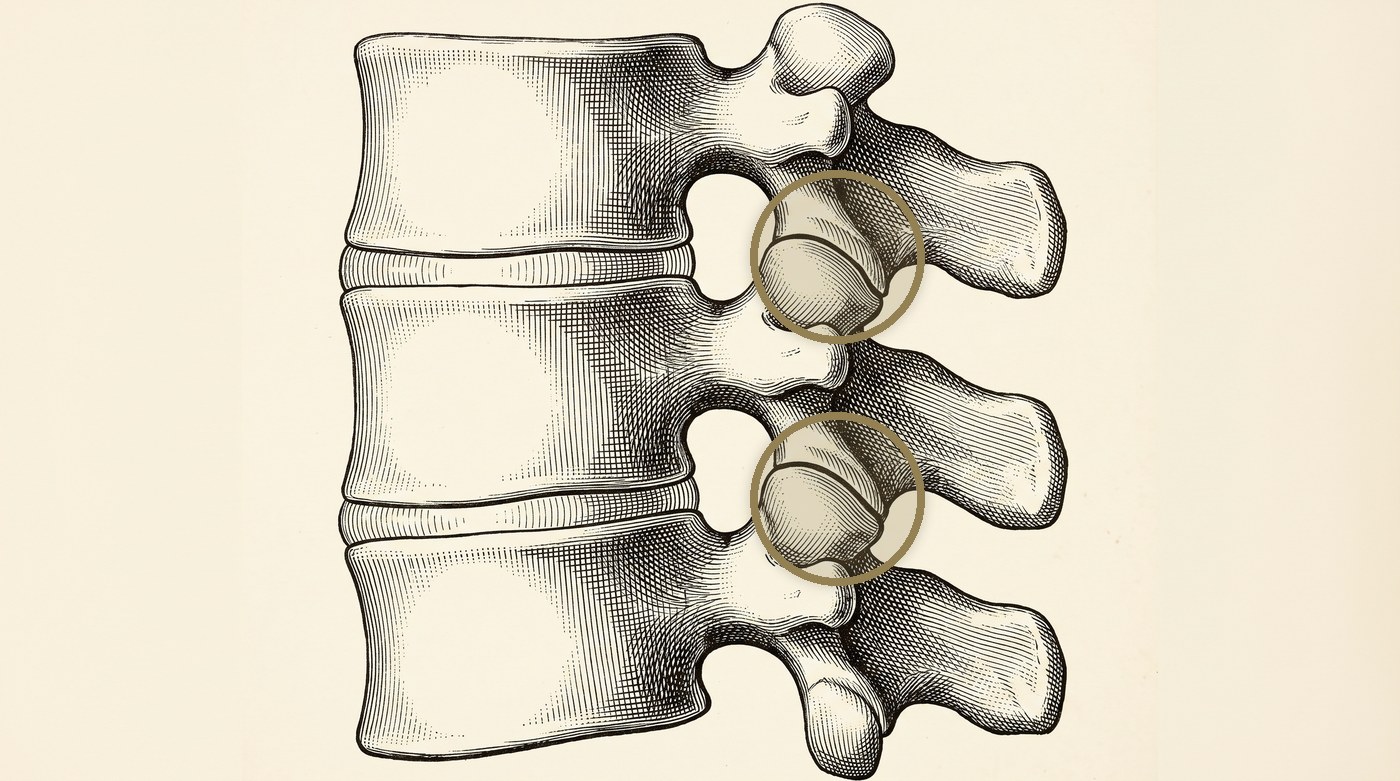
One-sided pain, worse with leaning back or rotating, worst getting up from a chair or bed. Small paired joints that guide motion; when they lose their slack and compress, their lining gets pinched and stays irritated. They need slack put back into the system — opened, not just moved.
The nerve roots.
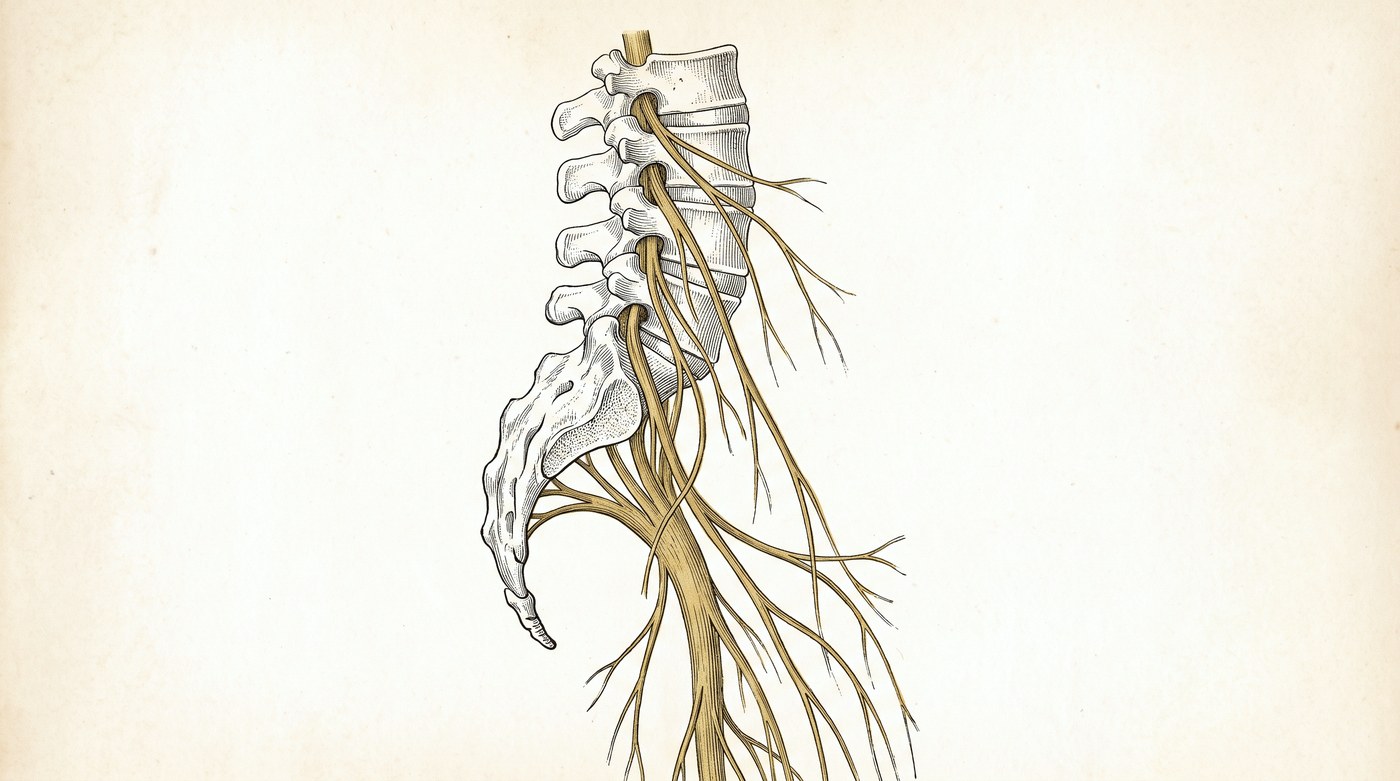
Radiating leg or arm pain, numbness, tingling, weakness — following the nerve's territory. Usually compressed by disc material, so unloading the disc unloads the nerve. Time matters here: recovering nerves usually show it within about two weeks, and long compression can become permanent. This is a tissue we watch closely and escalate early.
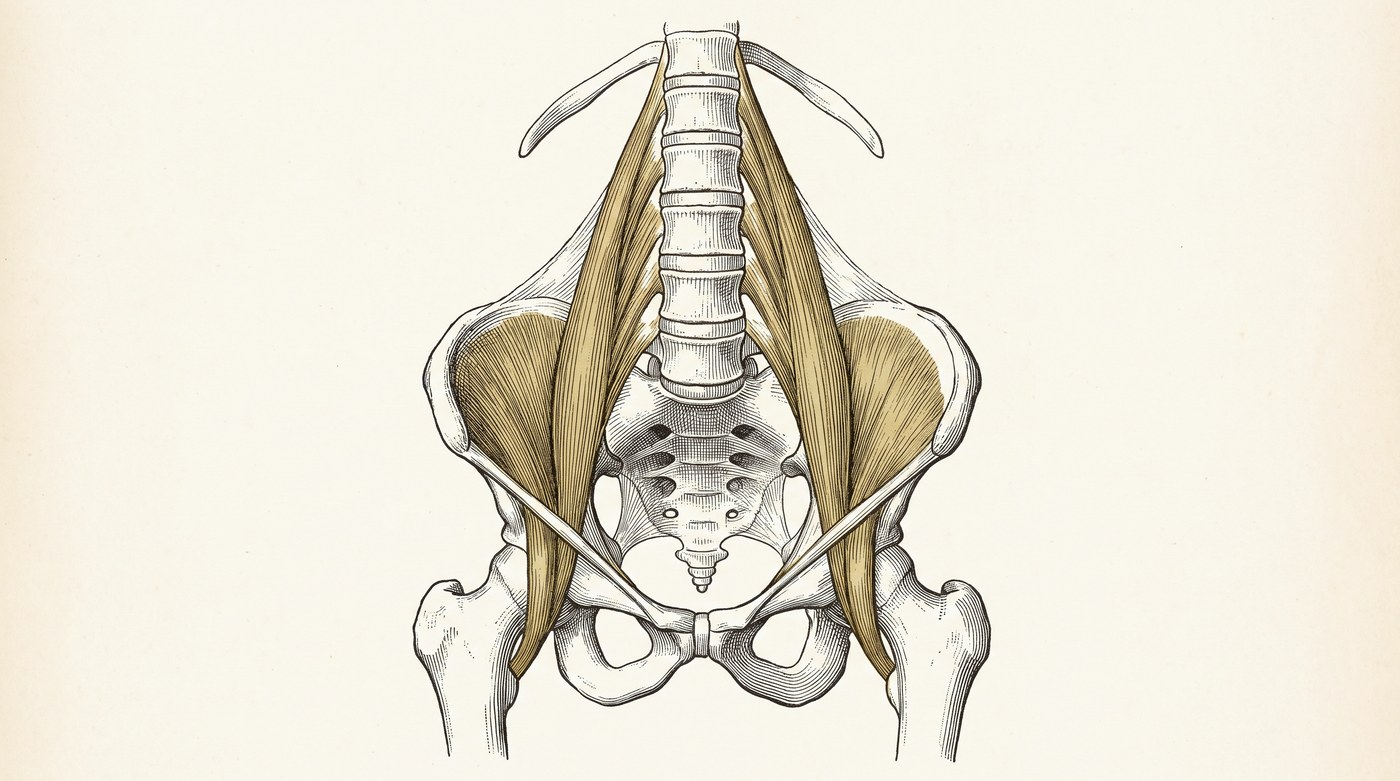
Muscle & fascia.
Diffuse, achy, often asymmetric — and the most underrated tissue on the list, because tight muscle and fascia are the internal loaders: they compress the spine constantly, even lying down. They need progressive lengthening — pinned, stretched, and released — not general stretching.
Bone is the fifth — and decompression is the exception that proves the rule.
Fractures and pathology are rare and need different, immediate care — see "when the list doesn't fit" below. And when the disc is the problem in a severe case, spinal decompression is usually required: it is the one modality that unloads all four tissues at once — opens the disc, opens the facets, frees the nerve, and lengthens the muscle and fascia. The method never requires equipment; severe disc cases are simply honest about what works.
Why this model is different
An orthopedic exam answers one question: which tissue is sensitive? Useful — but it stops one question short. The Biomechanical Problem List answers the one that matters: what is loading that tissue in the first place?
Sensitivity doesn't come from nowhere. It builds while a tissue is overloaded — and the loading shows up in ways you can see and feel long before it becomes pain. Find the loading, clean it up, and the sensitivity follows. That is the entire strategy.
The Biomechanical Problem List
The thirteen indicators, published.
Thirteen objective findings — things we can see and feel — recorded and tracked on every patient, every visit. Run in one flow, treating as we assess, the whole exam takes five to eight minutes. The grading is deliberately honest: if you have to stop and think about whether something is tighter on one side, it's probably even.
What we see
Postural findings — visible before a hand is laid on.
01Leg lengthseven · short right · short left
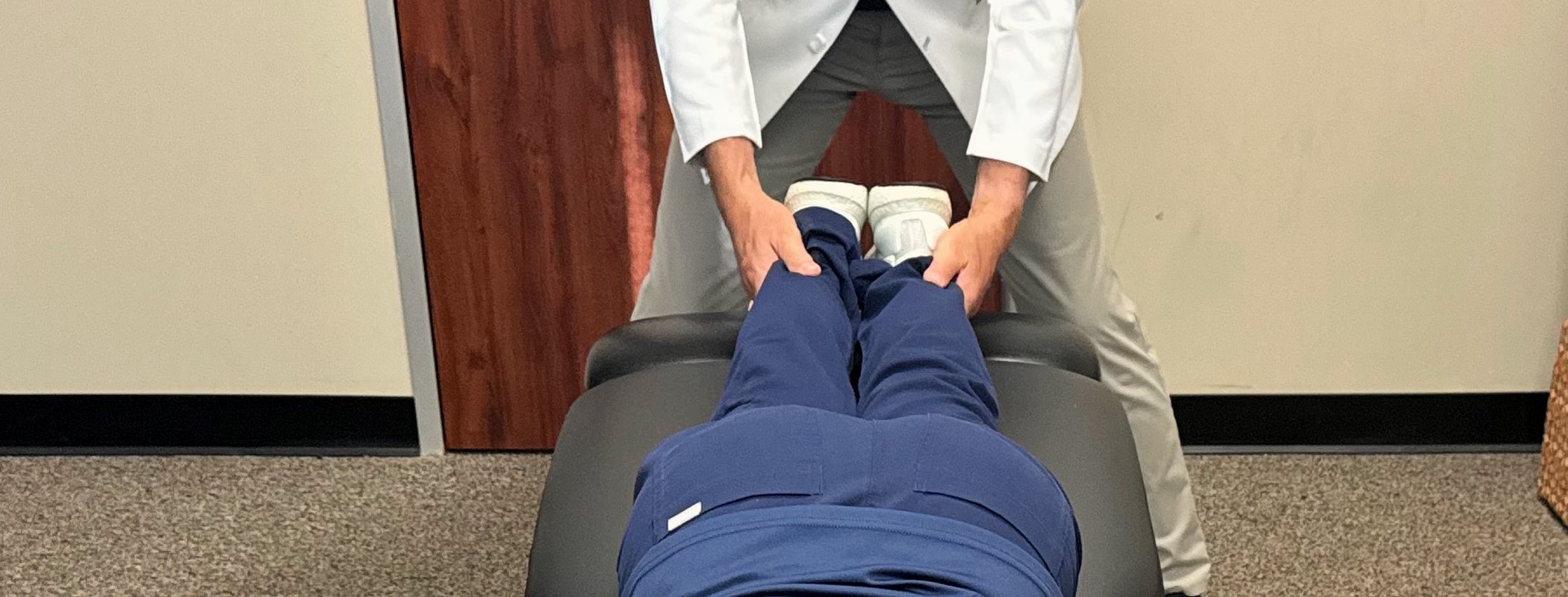
Face-down, a visual check at the heels. Most short legs are functional — driven by the tissues above — not anatomical; a true short leg is rare (about 1–2% of people) and is confirmed by standing X-ray before it's ever treated with a lift.
Signals: pelvic asymmetry → uneven loading across the low back
02Pelvic distortionyes · no
Does the pelvis sit level or crooked? The single most common visible finding when someone is in pain — the whole spine above compensates for a tilted base.
Signals: asymmetric loading of facets, discs, and soft tissue
03Shoulder posturenormal · forward: mild / moderate / severe
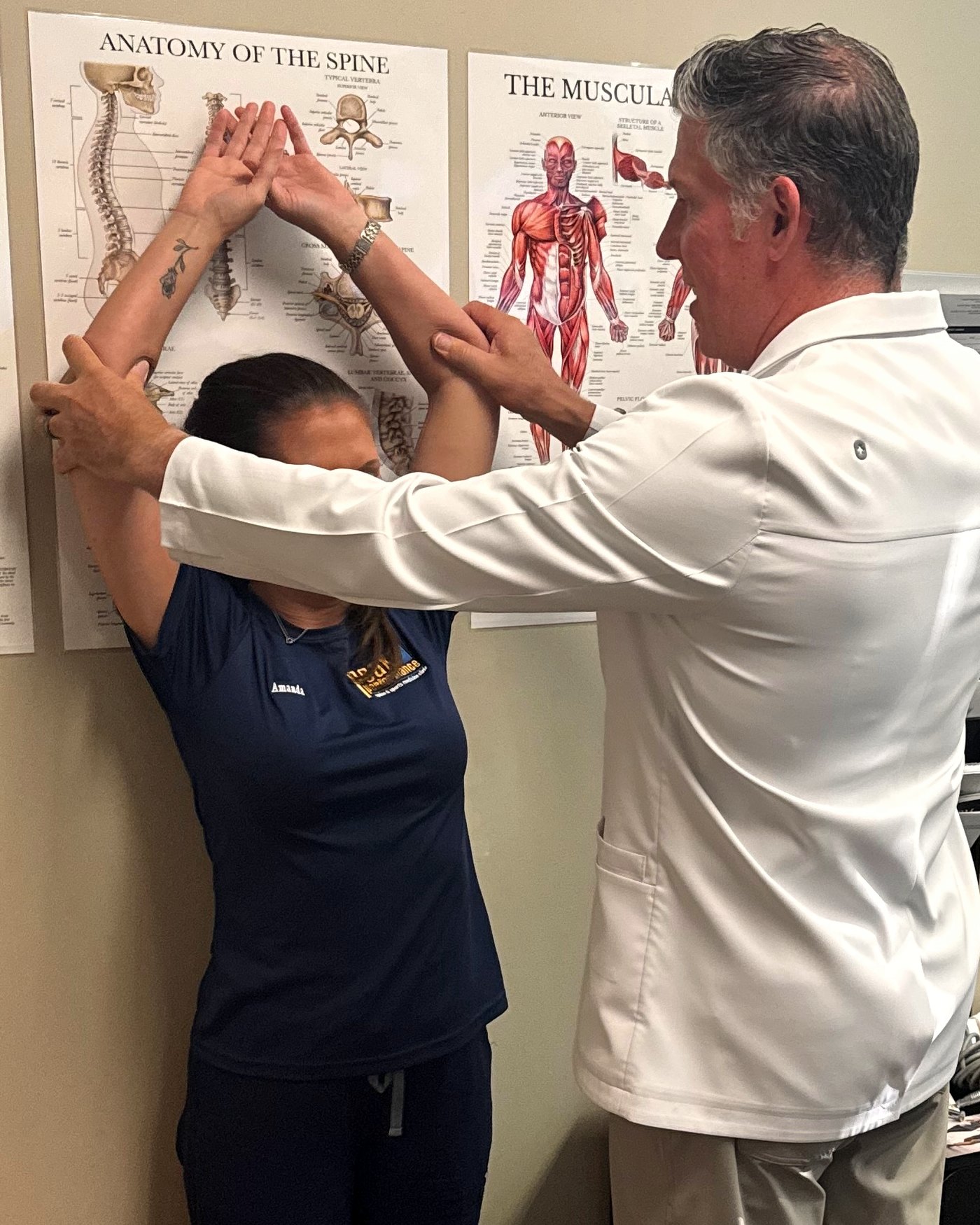
The wall test: back against the wall, arms overhead against it. The further the arms can't flatten, the more forward the posture — tight pecs pulling the shoulder girdle forward and loading the neck.
Signals: cervical and upper-back loading
What we feel — length and tone
The internal loaders, compared side to side. The comparison is the grade.
04Hip flexorseven · short right · short left
The psoas is preloaded, the rectus stretched over it, and the two sides compared. A short hip flexor pulls directly on the lumbar spine — one of the most powerful internal loaders in the body.
Loads: lumbar discs and facets, pelvis
05Hamstringseven · short right · short left
Supine leg raise — where does the tension catch, and does it catch earlier on one side? Uneven hamstrings tilt the pelvis and change how every bend loads the spine.
Loads: pelvis and low back through flexion
06Trapeziusnormal · tight right · tight left
Pinned while the chin goes to the opposite shoulder. Graded by which side resists.
Loads: base of the neck, cervicothoracic junction
07Levator scapulaenormal · tight right · tight left
Pinned while the chin goes to the same-side shoulder — the mirror of the trapezius check, and easy to mix up until it's trained.
Loads: neck and shoulder girdle
The lumbar checks
Motion, symmetry, and the disc's signature.
08Lumbar joint symmetryequal · tight right · tight left
In side posture, the joints are loaded on each side and compared — do they move as well to the left as to the right?
Signals: facet restriction and one-sided loading
09Full release, lumbar spineyes · no right · no left
After loading the joints — did they open completely, on both sides? A side that won't release is a side still holding load.
Signals: residual facet compression
10Lumbar bendclean · clean but stiff · guarded
A forward bend toward the toes, read for quality. Clean is smooth and full. Clean-but-stiff bends with restriction. A guarded, hesitant, non-smooth bend is the signature of a sensitive disc.
Signals: disc sensitivity
11Lumbar soft-tissue symmetrynormal · tight right · tight left
The paraspinal tissue is pinned during a forward bend — is one side tighter than the other? One-sided fascia is one-sided load.
Loads: low back, around the clock
The cervical checks
Joint symmetry, and extension under load.
12Cervical joint symmetryequal · tight right · tight left
The cervical facet joints, gently assessed side against side.
Signals: cervical facet loading
13Cervical extension dysfunctionnormal · mild · moderate · severe
Standing tall, chin tucked, head taken back into full extension. No pain at maximum extension is normal; pain only at the very end is mild; earlier or stronger grades moderate to severe.
Signals: cervical joint sensitivity under load
One of thirteen — the full course treatment
The hip flexor check, exactly as it's trained.
Lift the leg and preload the psoas. Stretch the rectus over the top of it and feel for tightness. Then do the other side — the comparison is the grade. If you have to think about whether one side is tighter, it's even; when the finding is real, it's obvious.
This is what every indicator gets in SLM Foundations: The 13-Point Assessment — positioning, what your hands should feel, what normal looks like versus each abnormal state, and the treatment that cleans it up. Free for founding members.
The treatment logic
Find the loading. Clean it up. The sensitivity follows.
Treatment order matters, and most care gets it backwards: unload first, strengthen last. Open the facets, decompress the disc when it's the problem, lengthen the tissue that's loading from within — then give sensitivity time to settle, and only then rebuild strength on tissue that's ready to carry it.
Mild ~6. Moderate ~12. Severe 18–24.
How long you've had it, what you've tried, what your history holds — that's what sets the plan, and the plan predicts the fewest visits clinical reason allows. Severe cases usually call for spinal decompression, then every-other-month monitoring for the rest of that first year while the interval tapers by the indicators.
Feel better. Look better. Treat better.
Patients report less pain, they look more symmetrical, and under trained hands they treat more even — hip flexors matching, side posture releasing fully. The findings clean up and the symptoms track right along with them. By visit four to six, the tissue diagnosis has proven itself — or we say so and help you take the next step.

When the list doesn't fit, think pathology.
Almost always, a patient in pain shows biomechanical findings that explain it. When they don't — real pain but loading the facets reproduces nothing, or everything hurts before any real pressure is applied — that is a red flag, and it gets escalated, not adjusted. Over thirty years of practice, the tip-off to pathology has been exactly this: pain that doesn't match the patterns on the list. Publishing our model means publishing its limits, too.
After recovery
The findings — not the calendar — decide when we see you.
A patient can feel fine while tightness is quietly setting back into the system. That loading, left alone, is the formula for the next flare — so periodic mechanical check-ups look for it and clean it up before the sensitivity ever develops. The thirteen indicators tell us whether your interval can extend or needs to tighten; home-care coaching helps you earn the longer stretch. For people with a history of spine problems, the goal is one to four visits a year. It is just as important to know when not to see a patient as when to see them.