 The Modern Chiropractor
An open movement to modernize chiropractic
The public already wants what we do. They just don't trust us to do it.
Low back pain is the leading cause of disability on Earth. The evidence supports mechanical care. The guidelines recommend it first. And still, nine in ten people never walk through our doors. We intend to change that — by changing us first.
I'm a chiropractor
Read the manifesto. Put your name on it.
An open, collaborative clinical framework — Spinal Load Management — and a set of standards we sign in public. Free to join. Built to be argued with, measured, and made better.
Start with the problem ↓I have back pain
See what honest spine care looks like.
A plain-language explanation of why your back hurts, what actually helps, and exactly what a Modern Chiropractor has agreed — in writing, in public — to do and never do.
What this means for you ↓I'm a physician
Trusted care for your back-pain patients.
A published framework, time-boxed care, guideline-concordant imaging — and reports back to you at every decision point. Co-management, specified.
How co-management works →The problem, in numbers
people worldwide live with low back pain — the #1 cause of disability on Earth
spent by Americans every year on back and neck pain — more than any other condition
of Americans would rather try non-drug care before prescription painkillers
is all who actually see a chiropractor in a given year
When Gallup asked why, the most common answer wasn't cost. It wasn't doubt that we could help. It was trust.
We earned this. That's the part we say first.
The public is not confused about chiropractic. The public is accurately perceiving that chiropractic is confused about itself. We are one license practicing as two professions — one tells patients "you have a specific mechanical problem, and here is the plan to resolve it." The other tells them "your spine needs correcting for life."
Patients can't tell from the sign on the door which one they'll get. So many choose neither. Four in ten Americans believe chiropractic means too many visits for too long — and they believe it because, too often, it has been true. The 48-visit protocol. The prepaid year of care. The X-ray that always finds something.
The Modern Chiropractor exists to become the trusted place to start when a person has spinal pain — not because we want access to the patient first, but because we have the tools to make a difference, and the knowledge to say when we can't. The way it should have been the entire time.
The model
Spinal Load Management
An open clinical framework built on a simple mechanical truth: back pain comes from tissue loaded beyond its capacity and left sensitized — either suddenly or over time. SLM identifies which tissue, unloads it progressively, rebuilds capacity — then helps you maintain it on your own, with periodic check-ups matched to your situation. No mystery. No dogma. No equipment requirement.

Back pain is mechanical.
It comes from excessive loading plus tissue sensitivity — in the discs, facet joints, nerve roots, or muscle and fascia. It is not mysterious, not random, and not a life sentence.
Sensitized tissue must be unloaded.
Not just rested. Not just strengthened. Not just adjusted. Unloaded — progressively and specifically — then rebuilt. Each of the four tissues requires its own approach.
Every spine has a loading margin.
Age, genetics, and history set part of your limit. Posture, strength, flexibility, and symmetry are the part we can improve — expanding the margin between your life and your pain.
As few visits as the case allows.
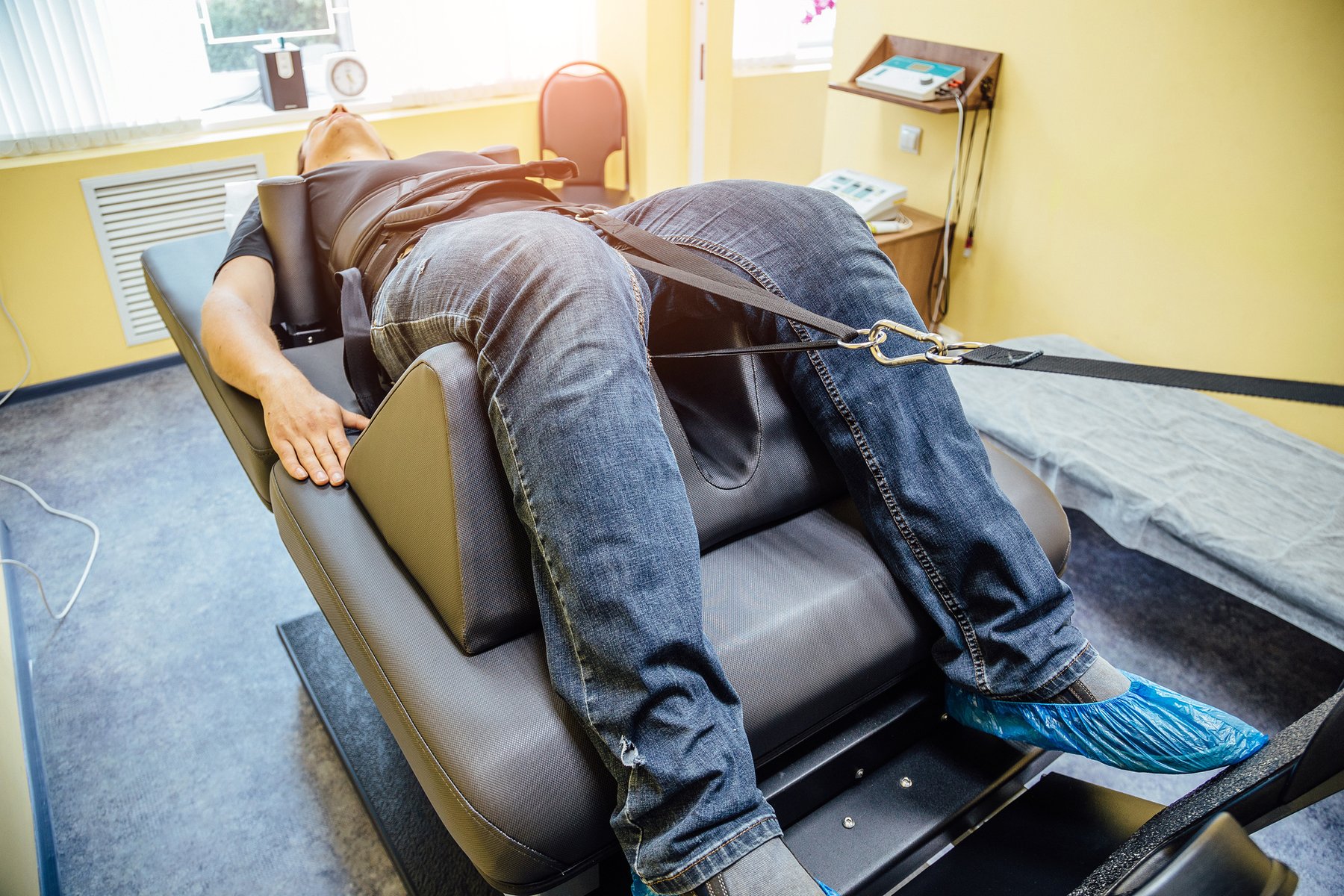
Every case is graded on its merits — how long you've had it, what you've tried, your injury history — as mild, moderate, or severe. The plan's job is to clean up the mechanics as quickly as clinical reason allows; severe cases usually call for spinal decompression. By visit four to six we know whether the tissue diagnosis is right — and if care isn't working, you hear it from us first.
The spine is managed, not cured.
Like teeth. Like blood pressure. A periodic mechanical check-up has one job: find evidence — seen or felt — of tissue loading before it turns into pain. Thirteen biomechanical indicators tell us whether your interval can extend or needs to tighten, and home-care coaching helps you earn the longer stretch. We are trying not to see you — for as long as the evidence says we can.
Read the full model — the four tissues and all thirteen indicators, published →
The standards
Signed in the open.
Every member agrees to these — publicly. Any patient can read them, and hold us to them. That is the point.
The standards are versioned and improved by the membership. This is v1.

We identify which tissue is sensitized — disc, facet, nerve, or muscle/fascia — and show you the reasoning.
Minor or recent pain rarely needs an X-ray before care begins. Severe, chronic, or recurring pain often does, to pinpoint which tissue is the problem. Imaging serves the diagnosis, not the sale.
Mild ~6 visits. Moderate ~12. Severe 18–24, usually with spinal decompression. The number predicts the fewest visits the merits of your case allow — judged by how long you've had it, what you've tried, and your history. Never a quota, always an endpoint.
By then, the tissue diagnosis has proven itself — or it hasn't. If you're not responding, we say so, and help you take the next step, even when it isn't with us.
When care is prepaid, it covers a defined, reasonable course aimed at the tissues driving the excessive loading — most often muscle and fascia, the spine's internal loaders. Not a year of open-ended visits.
Maintenance is measured in visits per year, not per month. The interval extends — or tightens — based on thirteen biomechanical indicators: evidence, not habit. Home-care coaching helps you go longer. For people with a history of spine problems, the goal is one to four visits a year.
No cure claims. No scare X-rays. No "silent killers."
When your problem needs an injection, a surgeon, or another professional, hearing it from us early is the service.
For chiropractors
You may have practiced this way quietly, alone, for years. You're not alone.
Founding membership is free — and it includes SLM Foundations: The 13-Point Assessment, the training that teaches you to find the loading, clean it up, and extend the interval. You also get the framework as it develops, patient-education assets, a community that argues in good faith, and your name on the movement from the beginning. When the public directory launches, founding members are listed first.
The framework is open. The standards are public. The organization is funded transparently — never by selling you a lifetime of seminars.
For patients
If you're hurting, here's the honest version.
Your back pain almost certainly comes from one of four tissues, loaded past its limit and left sensitized — sometimes suddenly, often over time. That is addressable more often than you've been led to believe, and manageable for life once you understand your own loading margin and what it takes to keep it growing rather than shrinking. A Modern Chiropractor will show you which tissue is involved, unload it with techniques matched to that tissue, confirm it's desensitizing, and then build toward treatment independence — as much self-care and as little professional care as your spine allows. Because you live on Earth, walk on two feet, and carry your spine upright, gravity never clocks out — so caring for a spine is a partnership between your daily habits and our periodic help. For people who've had spine problems, the goal is one to four visits a year.

Name the tissue, show the plan, predict the fewest visits your case allows, and re-check that it's working by visit four to six.
Sell you too much care up front, X-ray you to scare you, or keep you coming weekly — or monthly — forever.
If your case needs someone else — an injection, a surgeon — you'll hear it from us first, with a referral in hand.